
Scrambler (Calmare) Therapy for Intractable Chronic Pain

websitebuilder • August 30, 2021

Soo A Kim

Department of Physical Medicine and Rehabilitation, Soonchunhyang University Cheonan Hospital, Soonchunhyang University College of Medicine, Cheonan, Korea

Intractable chronic pain is a debilitative pain conditions for most patients. Unfortunately, the pain control managements currently have shown that it is not appropriate to reduce pain and limited efficacy and sometimes unfavorable in some patients. Scrambler (Calmare) therapy, used as an alternative treatment for chronic neuropathic pain recently, is a noninvasive approach to relieve pain by changing pain perception. The author reports the clinical experiences on effectiveness of Scrambler therapy for three patients with intractable pain refractory to conventional treatment.


Keywords: Scrambler therapy; Intractable pain; Conventional treatment.


INTRODUCTION


Chronic neuropathic pain is often difficult to treat effectively. Although conventional treatments including medication such as opioids and antipsychotic drugs, physical therapies and other managements can help, but some has side effects and limited effectiveness. Scrambler (Calmare) therapy is a noninvasive approach to pain control that attempts to relieve pain by providing ‘non pain’ information via cutaneous nerves to block the effect of pain information [1,2]. There are some research showed that Scrambler therapy has relieved refractory chronic pain in several uncontrolled clinical conditions; cancer pain with abdominal pain [1], neuropathic pain including failed back surgery, brachial plexus neuropathy and others [3], post herpetic pain [4,5], chemotherapy-induced neuropathic pain [6-8], cancer-related pain [8,9], chronic neuropathic pain including postsurgical pain and spinal canal stenosis [2], and low back pain [10]. In this case reports, scrambler therapy was applied to patients who had difficulty controlling pain with other conventional treatment methods.


CASE REPORTS


1. Case 1

A 54-year-old female patient visited outpatient clinic with pain in right hip area, which starts 84 months ago. She suffered from constant throbbing pain with intermittent burning and electricshock like pain. Several years ago, she complained for upper and lower extremities’ weakness and numbness and was diagnosed chronic inflammatory demyelinating polyneuropathy. She had taken several oral medications including pregabalin 600 mg and prednisolone 20 mg per day for several years. Seven years ago, she felt right hip pain and radiologic finding showed the suspicious of benign chondroma in right femoral intertrochanteric area. She had been treated with local intralesional lidocaine injection (sometimes steroid injection), epidural block, transcutaneous electrical nerve stimulation, extracorporeal shockwave therapy (ESWT), and opioid medications. However, her symptoms were gradually aggravated in spite of all treatment and the pain score on the visual analog scale (VAS) was 9/10. So we rechecked the radiologic finding of pelvic area and hip, the magnetic resonance imaging (MRI) findings showed mild subtrochanteric bursitis on both hips (Fig. 1).


Thus, we considered the use of Scrambler therapy for pain relief. Under informed consent, the patient was treated for 50 minutes daily for 10 consecutive days. The electrode patches attached the symptomatic area including right thigh and buttock and electrode intensity was increased to 5.5 mA until she endured. The impulses are transmitted by surface electrodes placed on the skin and the electrical charge used is low and even though the highest setting, the maximal intensity is 5.5 mA. A scrambler therapy was initiated and the VAS score was 9/10. After second session, the VAS score was 7/10 and she reported that the throbbing and tingling sensation decreased to a tolerable range. After fourth session, her pain score was 3/10 and the last treatment showed VAS score to 2/10. Six month later, she visited outpatient clinic and her VAS score was 3/10 and satisfied with her conditions.


2. Case 2


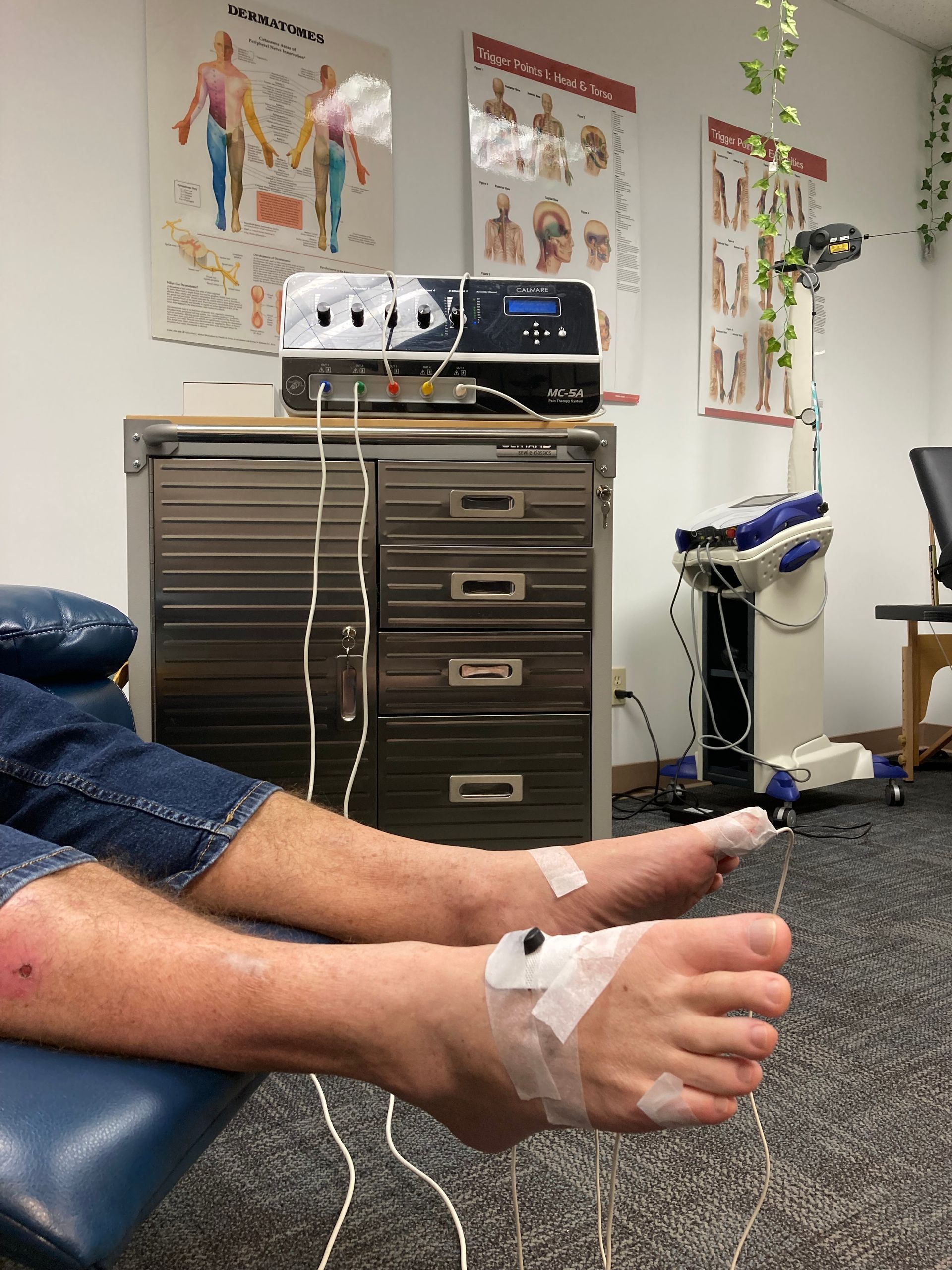
A 56-year-old female patient visited outpatient clinic with pain around both ankle and foot, which started several years ago. Ten years ago, she was diagnosed Guillain-barre syndrome and transverse myelitis on thoracic level after lower extremity weakness and numbness. She suffered from intractable pain on dorsal foot area and took pain control medications including neurontin 1,800 mg, alprazolam 1 mg, oxycodone 40 mg, and zolpidem 6.25 mg per day. And whenever she felt abrupt pain attack intermittently, she took intramuscular diclofenac injection and intravenous tramadol infusion, sometimes fentanyl patch used but not appropriately reduced pain. She did not want further medication and invasive procedures. Thus we treated her with Scrambler therapy. The 10 electrode patches was attached both her foot dorsum and ankle area following L5 and S1 dermatome distribution and electrode intensity was increased until she endured. With the patient’s informed consent, we started the Scrambler therapy with a 50-minute daily treatment for 10 days. At the beginning, the VAS score was 7/10. After seventh session, the VAS score was 4/10. On the last day, the VAS score was 3/10 and the abrupt pain attack was reduced to a tolerable range. Three months later, at the patient’s follow-up visit, the VAS score was 4/10 and the frequency and intensity of abrupt pain attack was decreased to 50%. She satisfied her condition these days.


3. Case 3


A 76-year-old female patient complained her mid thoracic area pain for three years ago. The pain was characterized as a splitting pain around the mid thoracic area. She had a lumbar discectomy operation 15 years ago in her past history. Radiologic finding showed multiple old compression fracture due to senile osteoporosis (Fig. 2). She had a several management for pain control including trigger point injection, epidural block, physical therapies, and ESWT. She still complained her pain even though various management. Thus we treated her with Scrambler therapy. Under the patient’s informed consent, we treated with the Scrambler therapy with a 50-minute daily treatment. The 10 electrode patches were attached vertical placement following the paraspinalis muscle. The electrode intensity was increased until she endured. At the beginning, the VAS score was 8/10. After third session, the VAS score was 5/10. She finished her treatment after five treatments. Four weeks ater, at the patient’s follow-up visit, the VAS score was 5/10 constantly. Eight months later, she felt her back area discomfort again. So we tried Scrambler therapy for four times. After finishing treatment, her pain subsided and the VAS score was 4/10.


DISCUSSION


The mechanism of scrambler therapy has not been clearly revealed, but relieved acute and chronic pain on the basis of information theory. Scrambler therapy synthesizes 16 different types of artificial nerve action potentials similar to normal nerve impulses, assembles them into sequences, and transmits them to the patient’ s nociceptors. And it modulates the pain information through patient-specific cutaneous electro-stimulation [2]. In author’s cases, all had been treated with conventional managements for more than several years but still complained of severe pain. For the purpose of pain relief, they received Scrambler therapy for 50 minutes daily for 5-10 consecutive days based on some clinical trials [1,2]. All three patients did not complain of any previously experienced severe pain after they received the Scrambler therapy. When the treatment was finished, constant pain was decreased by more than 50% compared with the previous condition. One of the three patients was given more treatment for a transient aggravation. Since then, all patients have been well managed with oral medications and do not complain of any undesirable side effects. Several studies on the efficacy of Scrambler therapy for cancer and refractory neuropathic pain such as post herpetic neuralgia have been introduced recently and reported good outcomes [1-9]. Scrambler therapy for the treatment of chemotherapy-induced peripheral neuropathy showed 53% reduction in pain score from baseline, 44% reduction in tingling, and 37% reduction in numbness [6]. And Scrambler therapy for cancer associated chronic neuropathic pain provided sustained improvement both acutely and chronically [8]. Marineo et al. [2] described that scrambler therapy relieved chronic neuropathic pain more effectively than guideline-based drug therapy, which 91% pain reduction compared with a 28% reduction using medications. Some case reports showed reduction in refractory post herpetic pain [5] and cancer pain [9]. Marineo et al. [2] suggested that this reason may be due to the feeling of new sensation around the dermatome along the lines of nerve transmission, the so called ‘pain scramble.’ Marineo et al. [2] described that the scrambler therapy provided the following mechanisms. First, Scrambler therapy gives new ‘non pain’ information that patients report new sensations in the pain area and it is not simple C-fiber electrical stimulation, which would produce pain. Second, scrambler therapy analgesia occurs quickly, suggesting that the receptors are transmitting the ‘non pain’ information. Third, the sustained pain relief for days or months suggests either resetting of calcium channels or remodulation of the pain system’s response. In conclusion, through this report, the author showed that Scrambler therapy appears to have benefit in the treatment of untreatable pain, who poorly respond on conventional treatments or have a fear of receiving other invasive treatments. The author was able to obtain a satisfactory effect by using scrambler therapy in patients with long-lasting untreatable pain and they did not complain of desirable side effects. However, there is not so many research regarding the influence of Scrambler therapy, so further larger investigation needed including more research with a large number of patients for various types of pain conditions.


REFERENCES


1. Marineo G. Untreatable pain resulting from abdominal cancer: new hope from biophysics? JOP 2003;4:1-10.

2. Marineo G, Iorno V, Gandini C, Moschini V, Smith TJ. Scrambler therapy may relieve chronic neuropathic pain more effectively than guidelinebased drug management: results of a pilot, randomized, controlled trial. J Pain Symptom Manage 2012;43:87-95.

3. Sabato AF, Marineo G, Gatti A. Scrambler therapy. Minerva Anestesiol 2005;71:479-82.

4. Smith TJ, Marineo G. Treatment of postherpetic pain with Scrambler therapy, a patient-specific neurocutaneous electrical stimulation device. Am J Hosp Palliat Care 2013 Jul 8 [Epub]. http://dx.doi.org/10.1177/ 1049909113494002.

5. Ko YK, Lee HY, Lee WY. Clinical experiences on the effect of scrambler therapy for patients with postherpetic neuralgia. Korean J Pain 2013;26: 98-101.

6. Pachman DR, Weisbrod BL, Seisler DK, Barton DL, Fee-Schroeder KC, Smith TJ, et al. Pilot evaluation of Scrambler therapy for the treatment of chemotherapy-induced peripheral neuropathy. Support Care Cancer 2015;23:943-51.

7. Pachman DR, Watson JC, Loprinzi CL. Therapeutic strategies for cancer treatment related peripheral neuropathies. Curr Treat Options Oncol 2014;15:567-80.

8. Coyne PJ, Wan W, Dodson P, Swainey C, Smith TJ. A trial of Scrambler therapy in the treatment of cancer pain syndromes and chronic chemotherapy-induced peripheral neuropathy. J Pain Palliat Care Pharmacother 2013;27:359-64.

9. Park HS, Sin WK, Kim HY, Moon JY, Park SY, Kim YC, et al. Scrambler therapy for patients with cancer pain: case series. Korean J Pain 2013;26: 65-71.

10. Starkweather AR, Coyne P, Lyon DE, Elswick RK Jr, An K, Sturgill J. Decreased low back pain intensity and differential gene expression following Calmare®: results from a double-blinded randomized sham-controlled study. Res Nurs Health 2015;38:29-38.

By Laura Brown January 27, 2026
If you are reading this, you already know pain is more than an ache. It can change how you move, sleep, work, and even how safe your body feels. This article explains Scrambler Therapy in clear, simple terms and places it where it belongs: as one helpful tool inside a larger, team-based approach to pain care. What Is Scrambler Therapy? Scrambler Therapy is a non-invasive, drug-free treatment designed to help calm pain signals. Chronic pain often means the nervous system keeps sending danger messages even when tissues are no longer injured. Scrambler Therapy uses small surface electrodes placed on the skin near, but not on, the painful area. These electrodes send gentle, non-painful signals to help interrupt pain messages and support calmer signaling patterns. What Scrambler Therapy Is Not Scrambler Therapy is not surgery, injections, medication, electrical shock, or a cure for all pain. It does not replace other forms of care and works best when combined with other supportive treatments. Why It Works Best as Part of a Bigger Plan Chronic pain involves more than nerves alone. Movement, stress, sleep, emotions, and past experiences all play a role. That is why many pain specialists support a multi-disciplinary approach that may include physical therapy, massage, education, counseling, lifestyle support, and Scrambler Therapy working together. A Final Word Scrambler Therapy is not a stand-alone answer to chronic pain, but for many people it can be a meaningful and supportive part of their care. When the nervous system begins to feel safer, other approaches such as movement, hands-on care, education, and emotional support often become more effective as well. Chronic pain is complex, and managing it takes time, patience, and the right combination of tools. Your pain is real. Your experience matters. And there are options that may help support your path forward. Sidebar: Questions to Ask Your Provider About Scrambler Therapy • Is my pain likely nerve-related or influenced by the nervous system? • Could Scrambler Therapy support the treatments I am already using? • What goals would we set before starting this therapy? • How would we measure progress or improvement? • How many sessions are typically recommended? • What does it feel like during treatment? • Are there reasons this therapy might not be a good fit for me? • How can this therapy fit into a broader pain management plan? About the Author Laura Brown is a physical therapist and massage therapist with 29 years of experience. She practices in Clifton Park, NY, and focuses on integrative, patient-centered approaches to chronic pain care.
By Laura Brown January 27, 2026
MLS Laser Therapy: Supporting Healing as Part of a Whole-Person Pain Plan Living with chronic pain can feel like your body is working against you. Pain may limit movement, drain energy, and make even simple tasks harder than they should be. If you are living with ongoing pain, you may be searching for treatments that feel gentle, safe, and supportive. MLS Laser Therapy is one option that may help as part of a broader pain management plan. What Is MLS Laser Therapy? MLS Laser Therapy is a non-invasive, drug-free treatment that uses specific wavelengths of light to support the body’s natural healing processes. Light energy may help reduce inflammation, support tissue repair, improve circulation, and calm pain signals. During treatment, the laser device is moved slowly over the painful area. Most people feel no heat or discomfort. What Makes MLS Laser Different? MLS stands for Multiwave Locked System. This technology uses two wavelengths of light at the same time, working together to help reduce inflammation while also supporting tissue healing. This combined approach is what sets MLS Laser Therapy apart from some other laser treatments. What MLS Laser Therapy Is Not MLS Laser Therapy is not surgery, injections, medication, a quick fix, or a cure for all pain. It does not replace other treatments and works best when used alongside other supportive care. Who Might Benefit? MLS Laser Therapy is often considered for muscle or joint pain, arthritis, tendon pain, soft tissue injuries, chronic inflammation, and pain that limits movement. Responses vary, and progress may happen gradually. Why It Works Best as Part of a Bigger Plan Chronic pain is influenced by many factors, including inflammation, movement, stress, sleep, and nervous system sensitivity. A multi-disciplinary approach may include physical therapy, massage, pain education, lifestyle support, and MLS Laser Therapy working together. When inflammation and tissue irritation are reduced, movement and daily activities may feel more manageable. A Final Word MLS Laser Therapy is not meant to stand alone, but for many people it can be a valuable and supportive part of a comprehensive pain care plan. Chronic pain deserves thoughtful care that respects both the body and the person living in it. Your pain is real. Your experience matters. And supportive options are worth exploring. About the Author Laura Brown is a physical therapist and massage therapist with 30 years of experience. She practices in Clifton Park, NY, and focuses on integrative, patient-centered approaches to chronic pain care.

Man in blue tank top on foam roller, stretching back.
By Laura Brown April 27, 2025
Foam Rolling: A Simple Tool to Boost Your Recovery Between Massages

By Laura Brown December 5, 2024
Relief Rise begins with a Mind-Body approach with veteran therapist, Cindy Perlin, LCSW

By Laura Brown April 29, 2024
**The Physical Impact of a Desk Job and How Massage Therapy Can Help**

By Laura Brown February 20, 2024
A 2 for the price of 1 deal that's worth it.

By Laura Brown February 13, 2024
Creating Sanctuary: The Importance of a Safe and Cozy Space
By Laura Brown February 13, 2024
Part 2 of a 2-part series
By Laura Brown February 13, 2024
Finding Relief: A Guide to Managing Low Back Pain. Part 1

By Laura Brown February 13, 2024
Get more out of your massage and out of life by self care between sessions.