

Inside Scrambler Therapy

websitebuilder • August 30, 2021

Abstract


Scrambler therapy (ST) is an electro-analgesia therapy for the noninvasive treatment of chronic neuropathic and cancer pain based on a new generation of medical device that uses 5 artificial neurons and is based on a novel theoretical model the differs from gate control theory. The active principle with Scrambler Therapy is such that synthetic “non-pain” information is transmitted by C fiber surface receptors. This is a different theoretical mechanism than the traditional electric stimulation of A-Beta fibers to produce paresthesia and/or block the conduction of nerve fibers to produce an analgesic effect, that is, via TENS (transcutaneous electrical nerve stimulation) machines. Scrambler therapy was developed to treat chronic neuropathic pain and cancer pain resistant to opioids and other types of treatments. The goal of Scrambler Therapy is to eliminate pain during treatment and allow for long-lasting analgesia after a series of 10 to 12 consecutive treatments performed over a 2-week period. The aim of this review is to clarify the underlying theory of Scrambler Therapy and describe the appropriate usage method that maximizes its effectiveness while reducing bias and deepen the explanation of the artificial neuron technology associated with Scrambler Therapy.


Keywords: artificial neurons, cancer pain, chronic pain, drug resistance, electro analgesia, gate control theory, neuropathic pain, opioids, Scrambler Therapy


Introduction


Scrambler therapy is aimed at creating a non-invasive highly effective treatment for chronic neuropathic and cancer pain, which is resistant to other treatments. A long-standing and commonly accepted model used to understand mechanisms of pain transmission and perception has been the gate control theory.1 Despite the time elapsed since its introduction in 1965, this theory still remains relevant today. However, it has been revised and updated and some aspects of the theory have been redefined.2,3

Since chronic neuropathic pain is characterized by abnormal function of the somatosensory nervous system, the gate control theory does not easily lend itself to the development of a new type of therapy.

On the other hand, in acute pain, where the cause/effect relationship between nociceptive stimulus and lasting pain follows the normal physiological response, the gate control theory is consistent and is confirmed by experiments.

It is interesting to note that the gate control theory is apparently in complete contrast with the Scrambler Therapy model, since C fibers and not A-Beta fibers are stimulated. Therefore, if we consider only the differential effect of the electrical activities between these 2 branches as required by the gate control theory, the stimulation of the C fibers must produce pain. In fact, if you eliminate the non-pain information from the emissions of Scrambler Therapy making it similar to a TENS (transcutaneous electrical nerve stimulation), this is exactly what happens. For this same reason, Scrambler Therapy requires careful positioning of the electrodes, always guided by patient feedback, so as to use only nerve pathways that do not present structural or functional alterations capable of degrading or not correctly conveying the synthetic information of “non-pain.” The result of the loss of information due to the impossibility of transmitting it correctly always transforms Scrambler Therapy emissions into simple electrical stimulus, which in addition to being ineffective, can easily produce pain instead of analgesia.

In a nutshell, the gate control theory addresses the activity of the nervous system in terms of “quantitative” electric impulses. However, the qualitative element is that these electric impulses are the basic information code by which the nervous system can be interpreted in a cybernetic model. In this broader context, pain can be interpreted analytically in terms of pure information4 and chronic pain as a plastic modification of the pain system governed by information.5 This is illustrated in Figure 1.

Consequently, the therapeutic approach is no longer to inhibit the transmission of pain, but to transform the information of pain into “non-pain” using the same pathways. In the Scrambler Therapy model, information becomes the central point of control of the plasticity of the pain system, both in the genesis of chronicity (induced by endogenous information of pain repeated over time) and in its regression (induced by synthetic information of “no pain” repeated over time). The theoretical expectation is therefore that of an immediate and complete analgesic effect in treatment, and of a return to normal physiological response after one or more cycles of treatment.

As far as the concept of information is concerned, there are different ways to represent it in a formally correct analytical way, but the most used model in the scientific and technological field is that of the Shannon information theory, which for this reason has also been used in Scrambler Therapy.

To put it simply, the fundamental elements of information theory are represented by an information source, a transmitter, a transmission channel, a receiver, a user, and a source of disturbance that acts on the transmission channel. This scheme, shown in Figure 2, can be applied to all forms of technological or biological transmission, identifying their functional counterparts.

Information theory, in addition to providing a general reference scheme for the coding and remote transmission of information, allows its mathematical treatment. Shannon succeeded in defining the equation with which to calculate the level of unpredictability of an information source, very similar to that with which Boltzmann had calculated the entropy of a thermodynamic system. For this reason, John Von Neumann (one of the pioneers of the computer) suggested adoption of the term entropy to indicate the complexity of the information available at the source in any communication system.

In practice, a reduction in entropy reduces the complexity of the signal, hence the number of bits (binary system used in computers) needed to encode it, and its degree of uncertainty toward the receiver. In other words, if random characters are typed to produce random sequences, the possible strings (messages) are near endless. If, on the other hand, the typing is “constrained” to produce only a limited number of words of the English language, the number of possible messages is drastically reduced. A similar problem exists in the Scrambler Therapy where the only messages that one wants to transmit are those that can be interpreted by the central nervous system as “non-pain.” It is therefore necessary to structure and optimize the synthetic information for the minimum entropy compatible with this purpose, which also means reducing the uncertainty in the interpretation of the message.


Continue Reading ...

By Laura Brown January 27, 2026
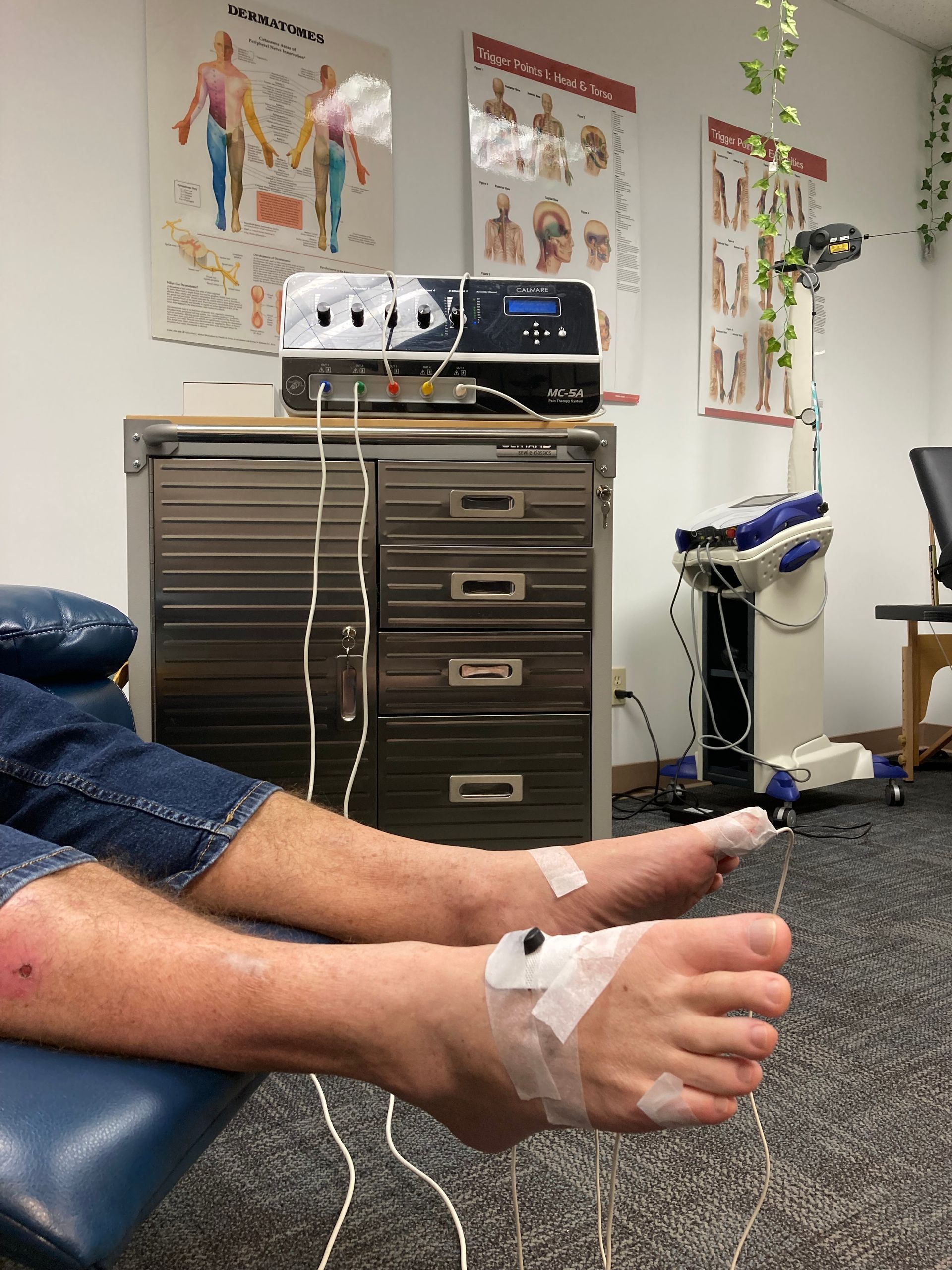
If you are reading this, you already know pain is more than an ache. It can change how you move, sleep, work, and even how safe your body feels. This article explains Scrambler Therapy in clear, simple terms and places it where it belongs: as one helpful tool inside a larger, team-based approach to pain care. What Is Scrambler Therapy? Scrambler Therapy is a non-invasive, drug-free treatment designed to help calm pain signals. Chronic pain often means the nervous system keeps sending danger messages even when tissues are no longer injured. Scrambler Therapy uses small surface electrodes placed on the skin near, but not on, the painful area. These electrodes send gentle, non-painful signals to help interrupt pain messages and support calmer signaling patterns. What Scrambler Therapy Is Not Scrambler Therapy is not surgery, injections, medication, electrical shock, or a cure for all pain. It does not replace other forms of care and works best when combined with other supportive treatments. Why It Works Best as Part of a Bigger Plan Chronic pain involves more than nerves alone. Movement, stress, sleep, emotions, and past experiences all play a role. That is why many pain specialists support a multi-disciplinary approach that may include physical therapy, massage, education, counseling, lifestyle support, and Scrambler Therapy working together. A Final Word Scrambler Therapy is not a stand-alone answer to chronic pain, but for many people it can be a meaningful and supportive part of their care. When the nervous system begins to feel safer, other approaches such as movement, hands-on care, education, and emotional support often become more effective as well. Chronic pain is complex, and managing it takes time, patience, and the right combination of tools. Your pain is real. Your experience matters. And there are options that may help support your path forward. Sidebar: Questions to Ask Your Provider About Scrambler Therapy • Is my pain likely nerve-related or influenced by the nervous system? • Could Scrambler Therapy support the treatments I am already using? • What goals would we set before starting this therapy? • How would we measure progress or improvement? • How many sessions are typically recommended? • What does it feel like during treatment? • Are there reasons this therapy might not be a good fit for me? • How can this therapy fit into a broader pain management plan? About the Author Laura Brown is a physical therapist and massage therapist with 29 years of experience. She practices in Clifton Park, NY, and focuses on integrative, patient-centered approaches to chronic pain care.
By Laura Brown January 27, 2026
MLS Laser Therapy: Supporting Healing as Part of a Whole-Person Pain Plan Living with chronic pain can feel like your body is working against you. Pain may limit movement, drain energy, and make even simple tasks harder than they should be. If you are living with ongoing pain, you may be searching for treatments that feel gentle, safe, and supportive. MLS Laser Therapy is one option that may help as part of a broader pain management plan. What Is MLS Laser Therapy? MLS Laser Therapy is a non-invasive, drug-free treatment that uses specific wavelengths of light to support the body’s natural healing processes. Light energy may help reduce inflammation, support tissue repair, improve circulation, and calm pain signals. During treatment, the laser device is moved slowly over the painful area. Most people feel no heat or discomfort. What Makes MLS Laser Different? MLS stands for Multiwave Locked System. This technology uses two wavelengths of light at the same time, working together to help reduce inflammation while also supporting tissue healing. This combined approach is what sets MLS Laser Therapy apart from some other laser treatments. What MLS Laser Therapy Is Not MLS Laser Therapy is not surgery, injections, medication, a quick fix, or a cure for all pain. It does not replace other treatments and works best when used alongside other supportive care. Who Might Benefit? MLS Laser Therapy is often considered for muscle or joint pain, arthritis, tendon pain, soft tissue injuries, chronic inflammation, and pain that limits movement. Responses vary, and progress may happen gradually. Why It Works Best as Part of a Bigger Plan Chronic pain is influenced by many factors, including inflammation, movement, stress, sleep, and nervous system sensitivity. A multi-disciplinary approach may include physical therapy, massage, pain education, lifestyle support, and MLS Laser Therapy working together. When inflammation and tissue irritation are reduced, movement and daily activities may feel more manageable. A Final Word MLS Laser Therapy is not meant to stand alone, but for many people it can be a valuable and supportive part of a comprehensive pain care plan. Chronic pain deserves thoughtful care that respects both the body and the person living in it. Your pain is real. Your experience matters. And supportive options are worth exploring. About the Author Laura Brown is a physical therapist and massage therapist with 30 years of experience. She practices in Clifton Park, NY, and focuses on integrative, patient-centered approaches to chronic pain care.

Man in blue tank top on foam roller, stretching back.
By Laura Brown April 27, 2025
Foam Rolling: A Simple Tool to Boost Your Recovery Between Massages

By Laura Brown December 5, 2024
Relief Rise begins with a Mind-Body approach with veteran therapist, Cindy Perlin, LCSW

By Laura Brown April 29, 2024
**The Physical Impact of a Desk Job and How Massage Therapy Can Help**

By Laura Brown February 20, 2024
A 2 for the price of 1 deal that's worth it.

By Laura Brown February 13, 2024
Creating Sanctuary: The Importance of a Safe and Cozy Space
By Laura Brown February 13, 2024
Part 2 of a 2-part series
By Laura Brown February 13, 2024
Finding Relief: A Guide to Managing Low Back Pain. Part 1

By Laura Brown February 13, 2024
Get more out of your massage and out of life by self care between sessions.